
Nexxus Aloe Rid Detox Shampoo: Does It Really Work?
You’re staring down a hair follicle drug test for a job, a license, or a court date. The clock is ticking, the anxiety is real, and every search result seems to point to one product: Nexxus Aloe Rid detox shampoo. But is it the silver bullet you need, or just another expensive letdown?
This isn’t just a review. Consider it a decision playbook. We’re cutting through the marketing noise to give you a clear-eyed assessment of Nexxus Aloe Rid—its history, its claims, and its stark reality. The critical point to grasp immediately is that the Nexxus Aloe Rid original formula and the current version on shelves are not the same product. Understanding that difference is the first step in avoiding a costly mistake. Let’s get into what that means for your test.
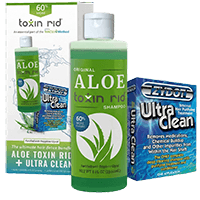
- Deeply cleanses hair of all toxins
- Highly effective for drug tests
- Effective for heavy users
- Effective for dreadlocks and dark hair
- Used in Macujo and Jerry G methods.
- Deeply cleanses hair of all toxins
- Highly effective for tests
- Effective for heavy users
- Effective for dreadlocks and dark hair
- Used in Macujo and Jerry G methods.
Understanding Nexxus Aloe Rid: Purpose vs. Unproven Detox Claims
So you’ve heard the name whispered in forums and seen it pop up in desperate searches. Nexxus Aloe Rid. But before we dissect its efficacy, we need a bedrock understanding of what this product actually is—and what it is not. The disconnect between its designed purpose and its hoped-for application is the first, critical piece of friction you’ll encounter.
The Original Purpose: A Surface-Level Cleaner
Nexxus Aloe Rid was never conceived as a drug detox solution. It entered the market as a clarifying shampoo, a category of hair care designed for occasional, deep surface cleansing. Its job was to strip away the external residues that accumulate from styling products, excess oils, and environmental pollutants like hard water minerals. Think of it as a reset button for your hair’s exterior, formulated with strong surfactants to leave strands prepped and clean for new styling.
The Detox Myth: Forum Lore and Desperation
Its reputation for passing hair follicle drug tests is an entirely user-generated phenomenon, born from online communities and trial-by-fire experimentation. The theory, propagated across countless threads, is that solvents like propylene glycol in the formula could penetrate the hair cuticle—the protective outer layer—and flush out drug metabolites (THC, cocaine, opiates) embedded within the hair’s cortex from the bloodstream. This hope catapulted a discontinued hair care product into the high-stakes world of drug testing, with resale prices soaring to $400 as counterfeits flooded the market.
The Core Doubt: Clarifying vs. True Detox
Here’s the antithesis to the hype: the fundamental science of hair growth and drug incorporation works against this claim. Drug metabolites aren’t sitting on your hair; they are woven into its structure as it grows. A clarifying shampoo, by design, works on the surface. Consequently, the leap from removing styling gel to extracting deeply embedded toxins is a massive, unproven one. There is no peer-reviewed evidence confirming that standard clarifying shampoos can alter lab-detectable drug levels in the hair cortex. The current commercial versions have even been reformulated with more conditioning agents, potentially diluting whatever harsh cleansing properties the original might have had. This gap between anecdotal forum success and clinical proof is where your skepticism should begin. It naturally leads to a pressing question: if the product’s very category is mismatched for the task, what does that say about the different versions and formulas you’re seeing for sale?
Identify Your Drug Test Scenario: A Playbook for Decision-Making
The uncomfortable truth is this: there is no universal solution for passing a hair follicle drug test. Your success hinges on a brutal calculus of your specific constraints—time, hair type, and the legal or employment context you’re trapped in. Treating this as a one-size-fits-all problem is the fastest path to failure. Before you evaluate any product, you must first diagnose your exact situation.
Consider this your decision-making playbook. Identify which of these high-stress scenarios matches your own:
- Pre-employment CDL/Trucking Test: Your primary constraint is often regulatory confusion. While some employers use hair tests for internal screening, federal DOT regulations (49 CFR Part 40) do not authorize them for compliance reporting. This creates a murky, high-stakes environment where the testing standard isn’t always clear.
- Probation, Court, or Child Custody Test: The constraint here is legal oversight and an extended detection window. A standard 1.5-inch scalp sample looks back roughly 90 days, and the process is strictly monitored. For specialized strategies for passing a probation drug test, the margin for error is virtually zero.
- Body Hair Test (Due to Baldness or Short Scalp Hair): Your constraint is a dramatically extended and non-segmented detection window. Body hair grows slower, potentially revealing drug use from up to a year prior, and cannot show a timeline of use.
- Short-Notice Test (24–72 hours): Time is your only constraint. Standard detox protocols are useless. You need an aggressive, immediate intervention that can work within a dangerously tight window.
- Thick, Ethnic, or Textured Hair (Including Dreadlocks): Your constraint is product penetration and hair integrity. Darker, thicker hair binds certain drug metabolites more effectively, and dense styles require meticulous sectioning and saturation that many methods cannot achieve.
Locate your scenario. Understand its unique pressures. Because now that you know your battlefield, the critical question becomes: does the formula of the product you’re considering even have a chance to work for it?
Formula Differences: How Changes Affect Nexxus Aloe Rid’s Reliability
Understanding the formula is the first step in judging reliability. It’s the bedrock of any claim. And here, we encounter a critical divergence—a fork in the road that most buyers completely miss.
There are effectively two different products sharing a similar name. The original “Old Style Aloe Toxin Rid”—the formula that built the reputation—is no longer made by Nexxus. What TestClear sells is a recreation of that discontinued, potent formula. In stark contrast, the “Nexxus Aloe Rid” you find on Amazon or in drugstores is a modern reformulation. It’s designed for general hair care, not intensive detox.
The core difference boils down to one key ingredient: propylene glycol. In the original “Old Style” formula, this solvent and penetration enhancer was present in higher concentrations. Its job was to act like a chemical crowbar, helping to dissolve and lift residues embedded deep within the hair shaft—the cortex, where drug metabolites hide.
The modern retail version has pivoted. It’s now saturated with conditioning agents—avocado oil, ceramides, wheat lipids—aimed at hair health and shine. The aggressive cleansing solvents have been dialed back. It’s become a commodity conditioner, not a specialized detox tool.
This isn’t a minor tweak. It’s a fundamental change in purpose. And it directly maps to your scenario:
- For the heavy, chronic user: Metabolites are deeply layered in the cortex. A weaker formula lacks the chemical potency to reach them.
- For “hard” drugs like cocaine or meth: These metabolites bind tightly to melanin in the cortex. Surface-level cleansing is futile.
- For body hair tests: Body hair grows slower and can store metabolites for longer. A diluted formula stands even less chance of affecting these deeply embedded stores.
Consequently, buying the cheaper, modern Nexxus bottle isn’t just a different choice—it’s likely choosing the wrong tool for the job. You’re purchasing a hair conditioner when you need a chemical solvent. This raises the immediate, practical question: if the formula itself is weaker, how is it even supposed to be used to achieve the required depth of cleansing?
- Deeply cleanses hair of all toxins
- Highly effective for drug tests
- Effective for heavy users
- Effective for dreadlocks and dark hair
- Used in Macujo and Jerry G methods.
- Deeply cleanses hair of all toxins
- Highly effective for tests
- Effective for heavy users
- Effective for dreadlocks and dark hair
- Used in Macujo and Jerry G methods.
Usage Methods and Failures: The Harsh Reality of Nexxus Aloe Rid Routines
If the formula is diluted, the prescribed ritual becomes even more critical—and more brutal. The standard playbook for using Nexxus Aloe Rid isn’t a simple wash; it’s an aggressive, multi-step chemical assault known as the Macujo Method. This isn’t a gentle cleanse. It’s a high-friction, high-risk regimen designed to forcibly pry open your hair’s cuticle to reach the cortex.
The routine is a gauntlet. A typical cycle involves:
- An initial wash with the shampoo.
- Applying a baking soda paste to scrub the hair shaft.
- Saturating the scalp with salicylic acid astringent (like Clean & Clear) and sitting under a shower cap.
- Scrubbing with Liquid Tide laundry detergent.
- Repeating the acid and detergent steps, with vinegar often mixed in.
- A final Aloe Rid wash to (theoretically) remove residues.
The immediate pain points are severe and unavoidable.
- Physical Toll: The repeated application of acidic astringents and harsh detergents causes severe scalp irritation, chemical burns, open sores, and rashes. Your scalp isn’t just dry; it’s under chemical siege.
- Financial Drain: The cost isn’t just the shampoo. The full regimen—requiring multiple bottles of astringent, detergent, vinegar, and the shampoo itself—can run $200–$250 per attempt. For heavy users needing 10-15 cycles, the cost becomes astronomical.
- Time Sink: A single cycle consumes 2–3 hours. This isn’t a one-and-done solution; it’s a part-time job.
This harsh reality immediately fails in common, high-stakes scenarios.
- For the 24-Hour Notice Test: This method is a non-starter. It’s most effective with 10+ days of lead time for multiple cumulative cycles. A frantic, single-day blitz is physically dangerous and chemically ineffective.
- For Sensitive Skin: If you have eczema, psoriasis, or any scalp sensitivity, this method is explicitly not recommended. The stinging and burning intensify with each repetition, risking permanent damage.
- For Thick or Ethnic Hair: Coarse, curly, or natural hair textures are notoriously resistant to penetration. The method requires significantly more cycles (4-7 minimum) to even attempt deep cleansing, compounding the pain, cost, and time.
Faced with this brutal calculus, many users seek a Macujo method without Nexxus Aloe Rid. They look for alternative products for the method or pivot entirely to the Jerry G Method, which uses bleach and ammonia-based dye to “crack” the hair shaft—a different kind of chemical warfare.
Why do people skip Nexxus in the routine? The reasons are pragmatic. The cost concerns are paramount; the shampoo is the most expensive component. Procurement delays are a major hurdle—genuine Old Style formula is hard to find locally, leaving users scrambling. And deep skepticism sets in: after enduring this pain, is there any clinical proof the shampoo itself is the active ingredient, or is it just an expensive part of a corrosive cocktail?
So you’re left with a process that’s physically punishing, financially draining, and logistically demanding. It demands a high price in pain and currency. Which forces the unavoidable, critical question: if you survive the ritual, does it at least guarantee you’ll pass the test?
Evaluating Effectiveness: Does Nexxus Aloe Rid Pass the Test?
Let’s cut through the noise. You’re staring at a hair test date on the calendar, and the single, burning question is: Will Nexxus Aloe Rid actually work for me? The online discourse is a battlefield of claims, a homogeneous mess of “it worked!” and “total scam!” To make a rational decision, we need to dissect this feedback through the lens of your specific scenario—not the marketing copy.
The “Success” Story: A Narrow Corridor
Positive nexxus aloe rid shampoo review threads and forum posts do exist. They form the bedrock of the product’s reputation. But scrutinize them, and a pattern emerges. These reports almost universally cite two non-negotiable conditions:
- The Macujo Method: The shampoo was never used alone. It was the centerpiece of the punishing, multi-step Macujo ritual involving vinegar, salicylic acid, and laundry detergent.
- Precise, Multi-Day Application: Success stories mention using the shampoo 6 to 15 times over a grueling 3 to 10-day period. It’s a part-time job of chemical scrubbing.
The implied conclusion? Any perceived effectiveness for passing hair tests is inextricably linked to surviving the entire corrosive regimen. The shampoo isn’t a silver bullet; it’s a key component in an extreme, physically taxing system.
The Failure Reality: When the Playbook Collapses
Now, contrast that with the prevalent negative reviews and BBB complaints. Here, the narrative shifts from “I passed” to “I did everything right and still failed.” This is the core of the skepticism. The failures aren’t from lack of trying; they’re from the method’s inherent limitations.
The “success rate” fractures along a critical fault line: your drug history and test type.
- The “Easy” Scenario Illusion: If you’re a light, occasional user (say, marijuana once or twice a month), a shorter, 3–5 day wash cycle might show positive results. The metabolite load in your hair cortex is lower. This creates a dangerous false positive for the product’s overall reliability.
- The “Hard” Scenario Collapse: This is where the model breaks down. For the chronic, daily user—or anyone facing “hard” drugs like methamphetamine or opioids—the feedback is brutal. Users report 10+ washes, following every step to the letter, and still failing. The shampoo’s mechanism appears insufficient to strip deeply embedded, high-volume metabolites. Your high-stakes test becomes a high-risk gamble.
Crucially, the user feedback and success/failure rates are further decimated by two logistical nightmares:
- The Body Hair Trap: If you’re bald or have very short hair, testers take body hair (chest, arms, legs). Body hair grows slower, creating a detection window of up to a year. Anecdotal reports are clear: users who passed with head hair samples after using the method later failed when the lab took body hair instead. The shampoo’s efficacy on different hair types is unproven and unreliable.
- The Lab’s Counter-Move: Modern confirmatory testing (GC-MS, LC-MS/MS) is sophisticated. Labs are trained to spot chemically damaged, fried hair—a red flag that can lead to sample rejection or more intense scrutiny. The very damage you inflict to pass can itself become a reason to fail.
So, you’re left with a product whose reported success is confined to a narrow, “easy” scenario corridor and requires a brutal ancillary process. For the high-stakes situations most readers face—chronic use, hard drugs, body hair tests—the evidence points not to reliability, but to a high probability of failure, despite significant financial and physical cost.
This forces a more fundamental question. If the results are this inconsistent, what are you actually putting your scalp through? To understand why the effectiveness is so scenario-dependent, we need to look past the marketing and at what’s actually inside the bottle.
Ingredient Analysis: Common Cleansers, Not Proven Detox Agents
So what’s actually in the bottle? The ingredient list reveals the product’s true capability—and it’s a stark contrast to the “detox” marketing. When you strip away the claims, you find a formulation of common cosmetic cleansers and conditioners, not specialized chemical agents.
Nexxus Aloe Rid ingredients read like a standard salon shampoo:
- Sodium Laureth Sulfate & Cocamidopropyl Betaine: These are the workhorse surfactants. Their job is to create lather and lift surface-level oils, dirt, and environmental grime from the hair strand. They are effective cleansers but they operate on the exterior.
- Aloe Barbadensis Leaf Juice & Panthenol (Vitamin B5): These are conditioning and soothing agents. Aloe hydrates the scalp and hair, mitigating the drying effect of the surfactants. They provide moisture, not detoxification.
- Propylene Glycol: A common humectant and penetration enhancer. It can help other ingredients absorb better into the hair’s outer layers, but it is not a detoxifying agent itself.
- Tetrasodium EDTA / Disodium EDTA: These are chelating agents. They bind to mineral ions from hard water, helping to remove that specific type of buildup. They target metals, not organic drug metabolites.
- Citric Acid: Primarily used to adjust the shampoo’s pH, which helps manage the hair cuticle’s state during washing.
The critical gap is this: these ingredients are designed for surface cleansing and conditioning. True drug incorporation happens when metabolites diffuse from the bloodstream into the hair follicle, becoming chemically bonded within the hair’s inner cortex. Standard surfactants cannot penetrate and disrupt that cortex to flush out deeply embedded toxins.
The role of surfactants and aloe here is purely cosmetic. They clean the hair’s exterior and soothe the scalp during washing. The lack of specialized detox chemicals—like aggressive reducing agents (e.g., sodium thiosulfate) capable of breaking down the keratin structure—means the formula simply isn’t engineered for the forensic challenge. For a heavy user or someone facing a test for cocaine or meth, these common ingredients are analogous to using a household cleaner to remove a stain that’s set deep into fabric fibers. It might brighten the surface, but the core problem remains untouched.
This fundamental mismatch between the formula and the task explains the scenario-dependent failures. If the active ingredients aren’t chemically capable of the job, the biggest risk shifts from product ineffectiveness to a more immediate one: buying a counterfeit version of an already-limited formula.
- Deeply cleanses hair of all toxins
- Highly effective for drug tests
- Effective for heavy users
- Effective for dreadlocks and dark hair
- Used in Macujo and Jerry G methods.
- Deeply cleanses hair of all toxins
- Highly effective for tests
- Effective for heavy users
- Effective for dreadlocks and dark hair
- Used in Macujo and Jerry G methods.
Purchasing Risks: Counterfeits, High Costs, and Availability Concerns
So, you’re considering Nexxus Aloe Rid. The first friction point you’ll hit isn’t about chemistry—it’s about commerce. And the stakes here are as high as the test itself.
The Core Gamble: A High-Cost, Unverified Purchase
Let’s address the elephant in the room: the price. A genuine 5 oz bottle typically runs between $130 and $235. For many, that’s a significant, painful investment—especially when stacked against car payments or rent. But the financial risk is compounded by a critical market reality: there is no reliable, centralized place to answer the question of nexxus aloe rid shampoo where to buy with confidence. Your search immediately splinters into a minefield of options, each with its own severe drawbacks.
The Marketplace Mirage: Amazon, eBay, and TikTok Shop
Your first instinct might be to check major third-party marketplaces. This is where the risk profile skyrockets. Platforms like Amazon, eBay, and TikTok Shop are saturated with listings for “old formula” or “Nexxus Aloe Rid.” The problem? These platforms are a hotbed for counterfeits and diluted, old-stock products.
Think of it this way: you’re not just buying a shampoo; you’re sourcing a critical tool for a high-stakes event from the equivalent of a digital flea market. Sellers operate with minimal oversight, and product consistency is a nightmare. The harsh truth is there’s no guaranteed way to verify authenticity before purchase on these sites. You’re essentially paying a premium for a mystery bottle.
The Specialty Store Alternative (and Its Limitations)
The more reliable sourcing channel is limited to specialty detox vendors—sites like TestClear or the Original Macujo Method site. These are the established incumbents in this niche. However, this “solution” introduces its own set of problems:
- The Price Persists: The high base cost remains, and you’ll often add another 10-20% for shipping fees.
- The Availability Crunch: Due to high demand and market volatility, genuine product frequently sells out. Finding nexxus aloe rid shampoo near me in a physical retail store is virtually impossible; it’s an online-only commodity.
- The Time Tax: While expedited shipping is an option, it’s an extra cost on an already expensive gamble. For someone on a 72-hour clock, any shipping delay is a catastrophic point of failure.
The Ultimate Risk: A Fake Product on a Tight Deadline
This brings us to the most severe scenario. You’re in a time-sensitive window, you pay the premium, and you receive… a counterfeit. The bottle arrives with a runny, thin texture instead of a thick green gel. It smells off, maybe vinegary. The label is slightly blurred. At this point, you’re not just out of pocket—you’re out of time. There is no recourse, no return window that will get you a genuine product before your test date. You’ve paid a high price for a guaranteed failure.
This purchasing chaos—a high-cost item sold in a market flooded with fakes—is the final layer of unreliability on top of the formula’s own limitations. It forces a sobering question: If the sourcing is this risky and the product itself is this unreliable, what do people actually do when it fails?
Identifying Counterfeit Nexxus Aloe Rid: Key Indicators to Check
Identifying Counterfeit Nexxus Aloe Rid: Key Indicators to Check
You’ve spent the money. You’ve waited, anxiously tracking the package. But the moment it arrives is not a moment of relief—it’s the most critical inspection point in your entire detox journey. Because in this market, a counterfeit isn’t just a rip-off. It’s a guaranteed failure.
Let’s be unequivocal: receiving a fake Nexxus Aloe Rid is not a financial setback you can recover from. It’s a strategic dead end. There is no time for returns, no customer service hotline that will overnight a genuine product before your test. You’ve paid a premium for a negative result, but you’ll get the opposite. Consequently, your first action upon unboxing must be a forensic examination.
Here is your high-urgency checklist. Treat it like a pre-flight inspection.
1. The Seal: Your First and Most Critical Tell
A genuine detox shampoo is a sealed chemical product. The factory seal must be intact. If the shrink wrap is missing, torn, or looks resealed, you are holding a tampered bottle. For Nexxus-branded bottles specifically, the presence or absence of a foil seal under the cap is a major indicator. No foil seal? The product is compromised. Full stop.
2. The Substance: Texture and Scent Don’t Lie
Open it. The authentic Old Style Aloe Toxin Rid formula is a thick, green gel. If what you pour into your hand is thin, runny, or watery, it’s been diluted or is a complete fake. Now smell it. The scent should be clean and consistent. A “off” odor, a chemical harshness, or a distinct vinegary smell signals a counterfeit formulation. Your nose knows—trust it.
3. The Label: A Forgery’s Flaws
Examine the packaging under good light. Authentic products have high-quality, precise label printing. Look for:
- Blurring or Fading: Text and graphics should be crisp.
- Misaligned Text: The print should sit straight on the bottle.
- Typos or Grammatical Errors: Professional brands don’t make these mistakes.
A cheap, poorly printed label is the hallmark of a cheap, poorly made fake.
4. The Marketplace & Price: The Context of the Scam
Where you bought it and what you paid are part of the inspection.
- Source: High-risk counterfeits flood third-party marketplaces like Amazon, eBay, and Walmart. These platforms are saturated with fakes.
- Price: The genuine article commands a price between $130 and $235. A “steep discount” or a price that seems too good to be true is the primary indicator of a fake. You are not getting a deal; you are getting a dud.
5. The Verification Details: Dig Deeper
If the initial checks pass, don’t stop. Perform these final verifications:
- Compare to Official Images: Pull up product photos from an authorized retailer like TestClear. Does your bottle match exactly?
- Find the Batch Code: Authentic products have printed lot numbers and batch details. No batch code? No authenticity.
- Check the Seller’s Policy: A legitimate seller provides a clear return policy and a proof-of-purchase receipt. No receipt, no recourse.
The final step is a small test: use a drop on your hand. It should lather predictably and rinse clean without a strange residue.
The Sobering Bottom Line
This checklist isn’t about being pedantic. It’s about realizing that the supply chain for this product is fundamentally broken. The market is so polluted with counterfeits that even a diligent buyer is gambling. You’re not just buying a shampoo; you’re navigating an arms race against fraudsters—and the stakes are your job, your license, your family.
When the product in your hands is a forgery, the entire expensive, painful protocol you’re about to undertake is built on a foundation of sand. It forces the ultimate question: If you can’t even trust what’s in the bottle, how can you trust the outcome?
When Nexxus Aloe Rid Falls Short: Scenario-Based Alternatives
So, the counterfeit gamble fails. The protocol backfires. The test is in 48 hours. What now?
This is the moment of pure, uncut desperation. When the primary method crumbles, people scramble for any ledge to grab onto. But let’s be clear: the alternatives we’re about to discuss are not solutions. They are damage control—fractured bedrock, not solid ground. They come with severe trade-offs, and understanding their limitations is critical to not making a bad situation catastrophic.
The Short-Notice Scenario: Buying Time with a Mask
When the lab appointment is tomorrow, deep detox is off the table. The only play left is a temporary mask—a surface-level cleanse designed to create a clean window for the test itself.
- The Common Gambit: Zydot Ultra Clean is the frequent go-to here. It’s a three-part system (shampoo, purifier, conditioner) marketed for “internal purity.” In reality, its best use is as a final, day-of treatment. It can help strip external contaminants and sebum from the hair’s surface, potentially lowering metabolite counts detected by an initial enzyme-linked immunosorbent assay (ELISA) screen.
- The Harsh Reality: This is a band-aid, not surgery. It does nothing to remove metabolites locked deep within the hair cortex. If the sample undergoes rigorous confirmatory testing like gas chromatography-mass spectrometry (GC-MS), the masking effect often evaporates. You’re betting the lab won’t look too closely—a risky wager when your career is on the line.
The Body Hair Scenario: The Painful, Detectable End-Run
If you’re bald or have very short hair, collectors will take hair from your arms, legs, chest, or beard. This isn’t a loophole; it’s often a worse predicament.
- The Desperate Move: Shaving your entire body. The logic seems simple: no hair, no test.
- The Inevitable Backfire: This is a glaring red flag. Collectors are trained to note unusual body hair absence. More critically, if no usable sample can be obtained, the test may be marked as a refusal—which carries the same consequences as a positive result. Furthermore, body hair grows slower, creating a detection window of up to a year. Metabolite concentrations are often statistically higher in body hair than in head hair. You’re not avoiding the test; you’re potentially amplifying the evidence against you.
The Heavy User Scenario: Beating a Dead Horse
For the daily or long-term user, the instinct is to repeat the harsh protocol—more washes, more cycles, more acid.
- The Flawed Escalation: Doubling down on methods like the Macujo or Jerry G protocol past 10+ cycles yields sharply diminishing returns. You’re not detoxing; you’re engaging in a chemical assault on your scalp.
- The Collateral Damage: The result is severe hair breakage, open scores, and chemical dermatitis. A lab technician isn’t blind. Hair that’s fried, bleached to a straw-like texture, or accompanied by a raw, scabbed scalp is an immediate indicator of tampering. It can lead to sample rejection or, worse, a more intensive scrutiny that your “mask” can’t withstand.
These are the cornered options. They are reactive, high-risk, and built on hope rather than science. They address symptoms, not the core problem: metabolites embedded in the hair shaft itself.
The need isn’t for a better workaround. It’s for a tool designed for the job from the ground up—one with a proven, original formula meant to solve this exact problem. That’s the foundation you actually need.
A More Reliable Option: Old Style Aloe Toxin Rid for High-Stakes Tests
For a high-stakes test, reliability isn’t a feature—it’s the entire foundation. When the outcome dictates your job, your license, or your family’s stability, you cannot afford a product with a diluted formula or unproven claims. This is where the logical, evidence-based pivot occurs.
The incumbent in this conversation, Nexxus Aloe Rid, has shifted its focus. Its modern formula is a commodity of hair care—prioritizing nourishment with oils and ceramides. But there’s a deeper problem here: that conditioning focus is the antithesis of what a deep detox requires. The metabolites aren’t on the surface; they’re locked in the cortex. You need a solvent, not a conditioner.
Old Style Aloe Toxin Rid is the synthesis of this conflict. It’s not a new product; it’s a recreation of the original, potent formula that built the reputation. The differentiator is its concentration and intent. Where the new Nexxus formula adds avocado oil, the Old Style formula maintains or increases the level of the key agent: propylene glycol.
Crucially though, this isn’t just about one ingredient. It’s a system engineered for penetration:
- Propylene Glycol: Acts as the primary solvent and penetration enhancer, prying open the hair cuticle to access the cortex.
- EDTA: A chelating agent that binds to and removes heavy metals and other residues.
- Advanced Microsphere Technology: Ensures the deep-cleansing agents are released gradually, maximizing contact time.
This is the bedrock of aggressive protocols like the Macujo Method for a reason. It’s designed from the ground up to strip, not to soothe. For the heavy, daily user—or anyone facing a test that samples stubborn body hair—this distinction is everything. A clarifier can’t reach the problem; a dedicated detoxifier can.
The purchasing model itself is a reliability feature. Old Style Aloe Toxin Rid shampoo is sold exclusively through specialized vendors like TestClear. This isn’t a retail product you’ll find at a drugstore. This controlled distribution is a direct countermeasure to the counterfeit and reformulation risks plaguing the Nexxus name. You’re buying the specific, potent formula, not a gamble.
Let’s be clear: this is not an upsell. It is the logical, evidence-based choice for anyone in a “hard” scenario who cannot afford to fail. When your livelihood is on the line, you choose the tool built for the highest-stakes job. The full breakdown of its ingredient profile and usage protocol explains exactly why its specific formula is required.
DIY Methods and Lab Risks: Limitations of Home Remedies
Let’s address the elephant in the room: the DIY route. When you’re staring down a test and your wallet is thin, the allure of household chemicals is powerful. You’re seeing forum posts about vinegar, baking soda, and laundry detergent, and you’re thinking, why spend hundreds when I can raid my pantry?
While some users pivot toward flushing your system for other types of screenings, these methods are distinct from the external hair stripping required for follicle tests. Here’s the reality of those hair methods. They operate on a brute-force principle—using acidic and abrasive agents to assault the hair shaft. You’re softening the cuticle with vinegar, scrubbing with a baking soda paste, and stripping with a surfactant like Tide. Some even escalate to bleach or permanent dye, attempting to chemically blast the cuticle open. But there’s a deeper problem here.
These routines are a gamble with your scalp and your sample. First, the physical cost is severe. This isn’t a gentle cleanse; it’s a chemical assault. Repeated exposure leads to extreme dryness, brittle hair that snaps, and painful scalp burns, rashes, and dermatitis. You’re trading a potential pass for visible, lasting damage.
Crucially though, the scientific bedrock isn’t there. No credible, peer-reviewed study validates that these home concoctions reliably alter a lab result. The core issue is metabolite bonding. Drug residues don’t just sit on the surface; they become embedded within the hair’s inner structure through strong molecular interactions. A vinegar rinse or detergent scrub can’t reach that deep. Even extreme bleaching may only reduce—not eliminate—concentrations, and labs know this.
And that brings us to the lab’s perspective. This is the antithesis of stealth. Testing technicians are trained to spot tampering. Hair that is chemically fried, excessively bleached, or visibly damaged is an immediate red flag. It can be documented as suspicious, and in severe cases, the lab may reject the head hair sample altogether, opting for body hair or another testing method. You haven’t just failed; you’ve announced you tried to cheat.
There’s also the conditioner trap. After such a harsh chemical wash, you’re told to reseal the cuticle with conditioner. But overdoing it, or using heavy leave-in products in the days after, can create a new layer of buildup—potentially trapping surface contaminants you just worked so hard to remove. It’s a delicate, error-prone balance.
The synthesis here is clear. These DIY methods represent high friction—extreme effort and risk for unproven, unreliable outcomes. They are the commodity option in a scenario that demands a precision tool. When your job, your license, or your family is on the line, relying on a corrosive household cocktail isn’t a thrifty hack; it’s a pathway to guaranteed physical damage and probable failure.
Final Decision: Choosing the Right Approach for Your Test Scenario
So, you’ve reached the final checkpoint. The decision matrix is simple, but the stakes are not. We’ve established that modern Nexxus Aloe Rid is a reformulated product—a conditioning shampoo masquerading as a detox solution. Its lack of clinical proof and rampant counterfeit market make it a high-stakes gamble, not a reliable tool.
The logic for your choice breaks down into two clear scenarios:
1. The “Easy” Scenario (Low-Risk Gamble): You are a light or occasional user with a standard head-hair test and a high tolerance for risk. In this narrow case, Nexxus might reduce some surface-level metabolites. But understand: you are betting your job or legal standing on an unproven, reformulated product with a high chance of being fake. It’s a commodity play for a precision problem.
2. The “Hard” Scenario (Likely Failure): You are a moderate, heavy, or chronic user. Your test involves body hair, thick ethnic hair, or dreadlocks. You have only a few days’ notice. For any of these, Nexxus Aloe Rid is almost certain to fail. The metabolites are too deeply embedded in the hair cortex for its conditioning agents to reach.
This is the synthesis of all the evidence: when failure is not an option, you need a purpose-built tool. Old Style Aloe Toxin Rid was engineered to replicate the original, effective formula—using propylene glycol as a solvent and EDTA as a chelator, delivered via microsphere technology for deep penetration. Paired with Zydot Ultra Clean on test day, it creates a multi-stage cleansing process designed for the hardest scenarios.
Your Final Action Checklist:
- Identify Your Scenario: Be brutally honest about your usage level and test type.
- Assess Your Risk Tolerance: Can you afford the scalp damage, the wasted money, and the probable failure of a cheap, corrosive DIY method or a reformulated shampoo?
- Secure the Proven Path: If your answer to “Can I afford to fail?” is no, then your step is clear. Purchase the authentic Old Style Aloe Toxin Rid from an authorized source like TestClear. Verify the thick green gel, the intact seal, and the proper price point. This is the differentiator between a desperate gamble and a calculated, reliable strategy.